

The root canal of each tooth houses the nerves and blood vessels for that tooth. Injury through dental decay, cracks or trauma can result in this nerve and blood supply being lost. There is then the potential for bacteria to thrive within the root canal space and spread to the peripheral bone, resulting in pain and infection. Root canal treatment describes a procedure whereby the root canal space is cleaned, disinfected and filled so that the tooth can be retained in the mouth but without pain or infection being present. It is a highly skilled procedure, particularly when treating molar teeth due to multiple root canals, adverse curvature of these canals and extra canals.
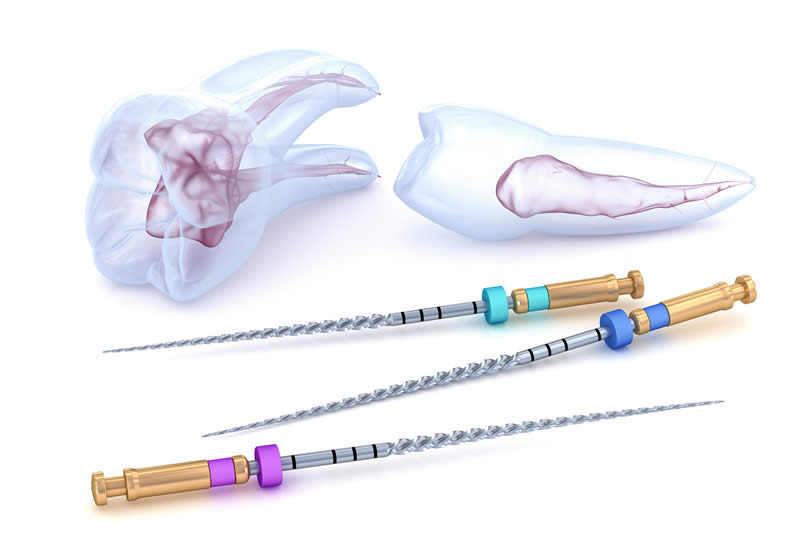
In order to ensure you get a brilliant result, we have invested in an operating microscope and are delighted to welcome our dentist with special interest, Dr. Casey David. Dr. David has completed significant additional training and a masters degree in endodontics (root canal treatment) and will be undertaking all of our endodontic treatment.
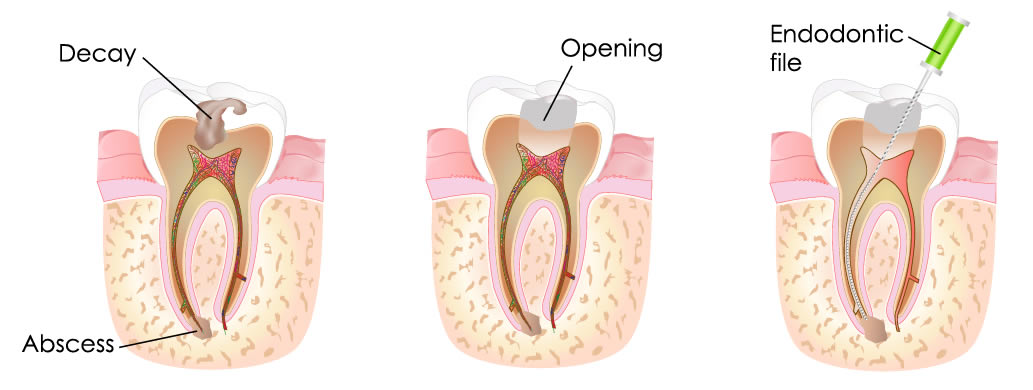
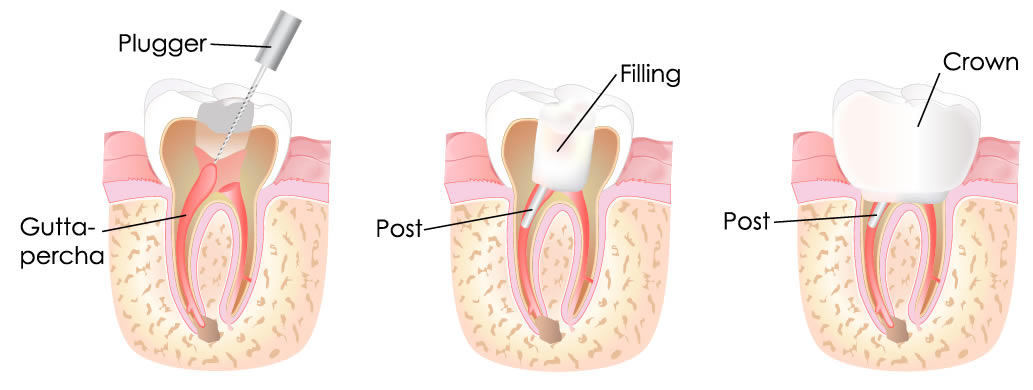
Root canal treatment would almost always be performed under local anaesthesia unless you request otherwise. Whilst the nerve is dead in most cases, pressure during the procedure can make it uncomfortable.
Root canal treatment can often be undertaken in a single appointment. Where multiple appointments are indicated, the cleaning, shaping and disinfection is carried out at the first visit and the root canal is filled at the second visit. A strong, antiseptic dressing would be placed between appointments to ensure any bacteria were eliminated prior to the tooth being obturated.
Treatment is carried out under great magnification and with exceptional skill using an operating microscope so that additional canals and even the most tortuous of canals can be successfully disinfected and filled, offering you piece of mind and a great prognosis.
Unfortunately, root canal treated teeth (particularly at the back of your mouth) are weaker and at higher risk of fracture than other teeth. Fracture can often be unfavourable and result in loss of the tooth. Leakage of bacteria around the margins of fillings can also result in contamination and failure of the root canal filling. Accordingly, the gold standard treatment for a root canal treated tooth would usually be a crown or cuspal-coverage inlay. These provide optimal resistance to fracture and optimal resistance to bacterial microleakage, offering the best possible prognosis. Root canal treated teeth can also become discoloured so provision of such a restoration will greatly improve the appearance of the tooth and make it match the adjacent teeth. Where this is not the case, a simple filling within the access cavity will often suffice for teeth at the front of the mouth or where the tooth is relatively intact.
If you are concerned about root canal treatment, please don’t be. The team at Woodbridge Dental Care is highly experienced and you can call us on 01394 334555 to arrange an appointment or please use website contact form.
