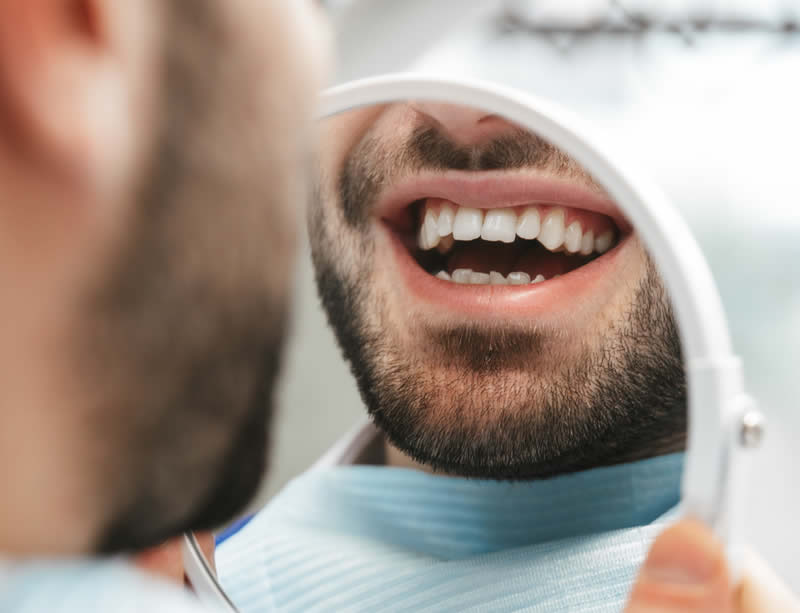
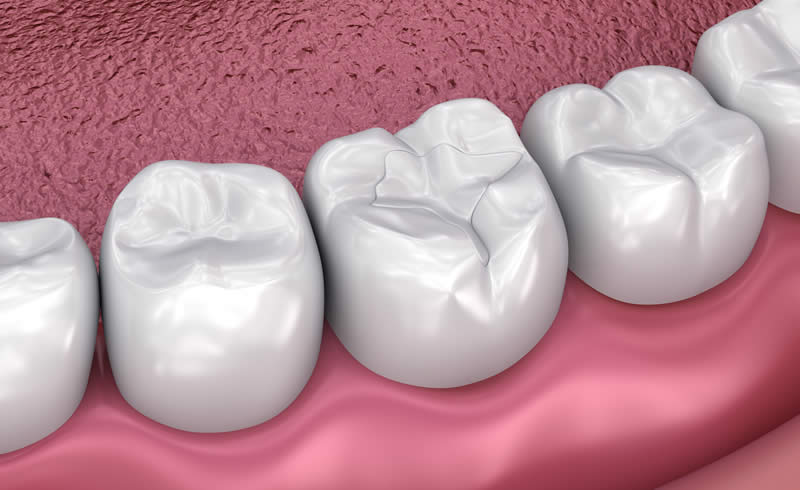
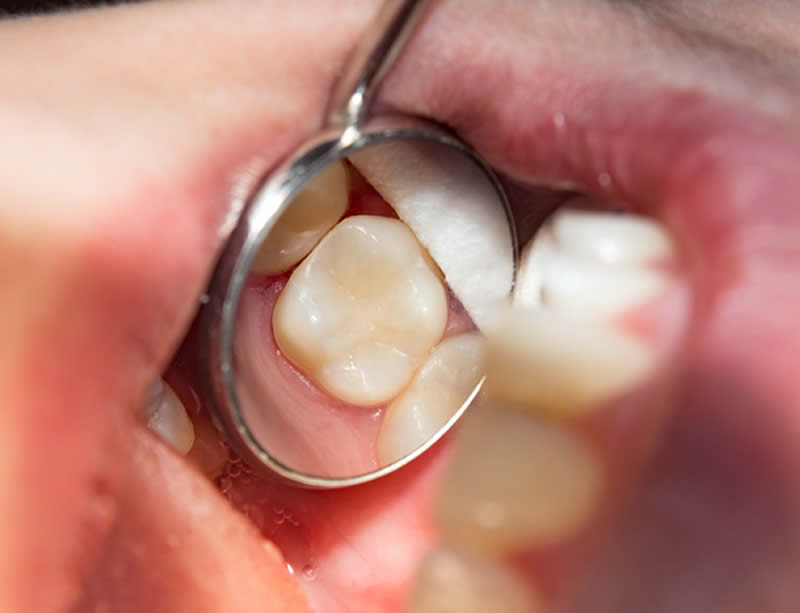
Dental composite is a white filling material which is a more modern, mercury-free alternative to dental amalgam (metal). It comprises of light cured resin filled with fine particles of nanosilica and zirconia. By changing the particle size of the filler, the product can be made suitable for multiple applications within the mouth and in cavities of differing strength and aesthetic requirements. Unlike dental amalgam, it is bonded to the tooth itself so cavities can be prepared more conservatively as mechanical retention is not required. It is also available in a wide variety of shades meaning can the appearance of these fillings can be closely matched to your natural tooth shade, regardless of what that shade may be.
Advances in technology have significantly improved the strength and bonding ability of these materials over the years, making them more well suited to replace dental amalgam as the material of choice for larger, load-bearing cavities within molar teeth as well as those aesthetic applications in the smile line. The result is a beautiful, durable filling that helps you keep your tooth and looks great too!
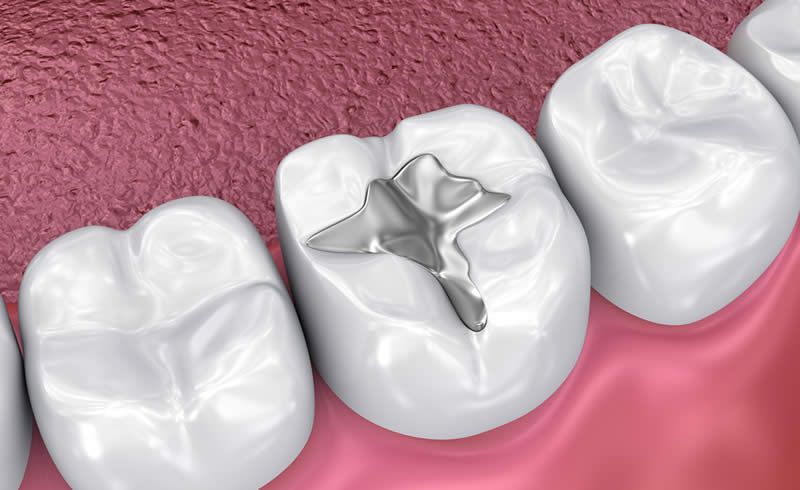
Whilst it was once the restorative material of choice, dental amalgam is progressively being phased out following the Minamata Convention (2018). This is principally due to mercury waste and the negative impact this has upon our environment through entry into the ecosystem, water system and ingestion in our diet through foods we eat.
Advances in the technology and bonding mean that composite fillings are now better than ever and are suitable for most applications traditionally reserved for dental amalgam. Nevertheless, dental amalgam remains an excellent filling material in certain applications such as sites of high risk of fracture or as a core beneath a crown. It is undoubtedly stronger and generally lasts longer than composite, hence we have no reservations offering it where we remain permitted to do so.
We would never encourage replacement of otherwise sound existing amalgam restorations. It is costly, can result in sensitivity and invariably results in further loss of tooth structure during the removal of the old restoration. Whilst they do not look as good as white fillings, amalgam restorations are very strong and once placed, the amount of mercury released is not proven to be detrimental to health. Replacement of healthy restorations would only be advised in patients unfortunate enough to develop a lichenoid (contact hypersensitivity) reaction to their presence. This would usually present as red areas of soreness or ulceration adjacent to where amalgam restoration contacts your oral soft tissues. Referral for patch testing can confirm such a reaction. Cosmetic replacement remains an option if you are greatly dissatisfied with the appearance of existing amalgam fillings and is something that we would gladly provide but would not encourage.